More than numbers
OU Math Corps shows that math can be the starting point for something much bigger
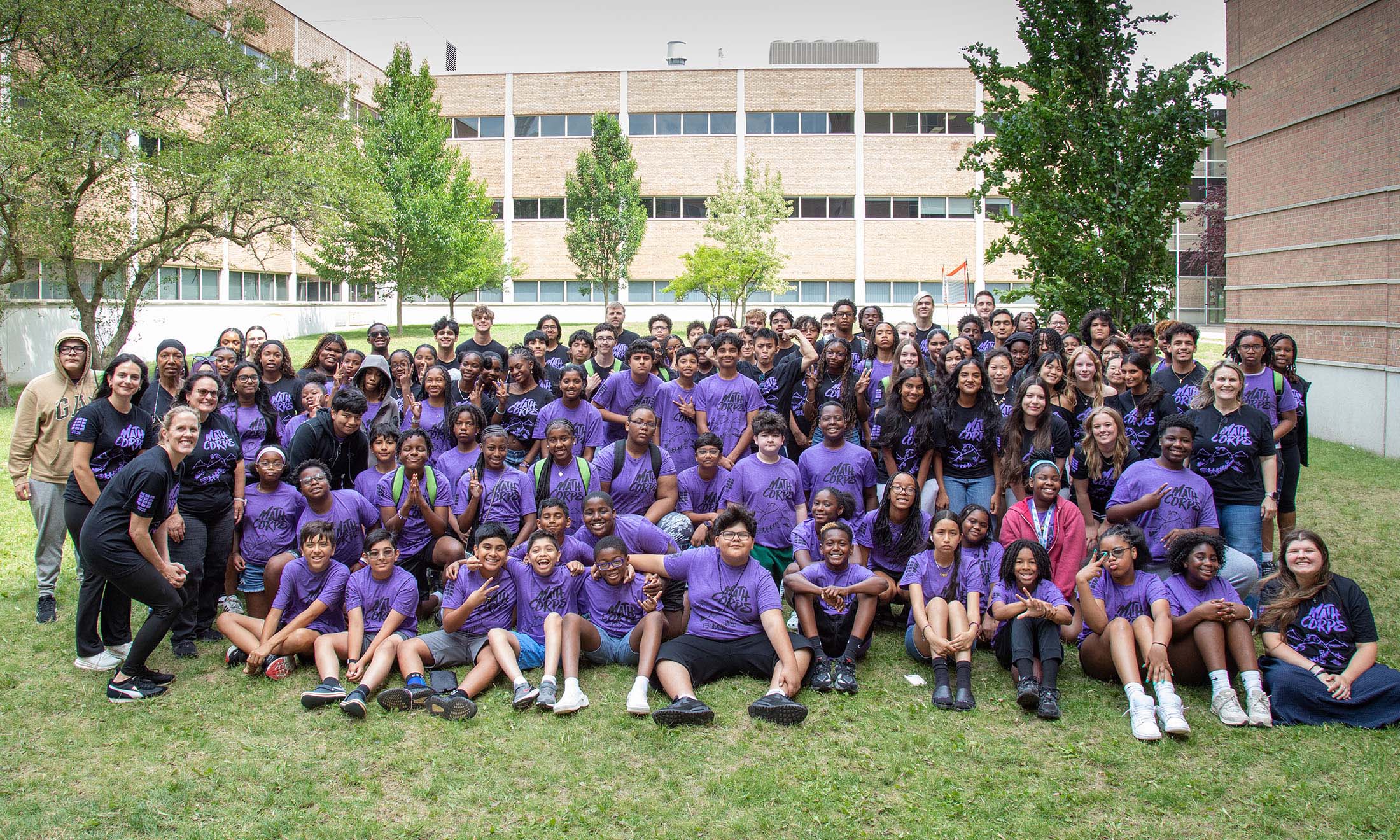
Oakland University Math Corps recently completed it’s seventh year. Photo provided by Shasta Lin Photography.
 August 25, 2026
 By Sara Nickel
Over seven summers, Oakland University Math Corps has become more than a place where students solve equations. It has evolved into a six-week community built on mentorship, encouragement and belonging — one where former campers return as teachers, university students become mentors and mathematicians become a vehicle for changing lives.
“It's really about loving and believing in children, and that’s what this camp is about, and it’s not just about saying it; it’s about actionable items,” said Anna Maria Spagnuolo, Ph.D., professor at Oakland University and Executive Director of the Oakland University Math Corps.
Although mathematics remains at the center of the program, organizers say the relationships formed throughout the six weeks are what keep students coming back year after year.
For participants who wish to return, the program offers an opportunity to become instructors for younger students after passing examinations. Those students are welcome back as staff members, creating a cycle of mentorship that extends well beyond a single summer.
“We take all of them back on staff, and we get them a job,” Spagnuolo said. “They have a powerful role in camp as a role model, and they’re still working on the math; it’s a lifetime camp.”
The sense of community is visible throughout the program. Students learn math from Oakland University faculty, while participating in daily assemblies that celebrate accomplishments, share jokes and recognize positive moments. Classrooms are decorated with students' names and artwork, creating a welcoming environment where asking questions is encouraged rather than feared.
After answering a question, students are often asked, “Do you want to explain?” giving a choice to share their thinking rather than being put on the spot. Classmates are encouraged to collaborate on solving problems, while hand signals allow students to quietly show encouragement.
“We are strong on peer support, and we know the kids can learn it, so we have fun with it,” Spagnuolo said.
For Janice Moore, Ph.D., special lecturer at Oakland University, those relationships become increasingly apparent as the summer progresses.
“It’s amazing because we’re only halfway and you can see significant changes. Every year it’s so cool to see all of us get used to the system and just become a family who takes care of one another. It's actually a meaningful change,” Moore said.
Watching that growth firsthand is what Moore said she enjoyed most.
“When I get to work with individual kids throughout, I get to see the change, the people, how much it means to them, and it really is just nice to know them too,” Moore said.
The program also shapes the Oakland University students who serve as CI’s and assistants.
Alexander Damiano, a second-year biology student, is spending his first summer as a CI after participating in the program for the past three years.
“It’s very fulfilling to be here and to work with the kids,” Damiano said. “It shifts my views of what I've been wanting to do in the job market.”
His favorite moments happen outside of solving math problems.
“Working with the kids, talking and afternoon activities being together, it’s so nice,” Damiano said.
Spagnuolo said many students arrive expecting a traditional summer math camp, but quickly realize the experience is something entirely different.
“We are nothing like public or private schools. We have mentorship throughout the day, and even if you don’t like math, you would love this camp. A lot of kids come into this camp not liking math at all, and several kids come into camp that do like math, and the balance just – it's amazing how it works out,” Spagnuolo said.
She said the connections that develop among students happen naturally.
“I call it a second loving family,” Spagnuolo said.
That family atmosphere traces back to the program’s earliest days.
“I could’ve said no in 2020, but I remember the day, and I thought about the kids and thought they were going to be really lonely, so the answer was yes, and it's been yes ever since that,” Spagnuolo said.
Since then, Math Corps has continued to produce lasting impacts long after students leave Oakland’s campus. Former participants have gone on to successful careers, including one alumna who created her own biochemistry outreach program and others getting scholarships to academic universities.
For Spagnuolo, those accomplishments are evidence that the program’s mission extends well beyond mathematics.
“Loving and believing in kids is real,” Spagnuolo said. “It creates such a powerful impact in the world; it’s just truly amazing to bring people together to truly put love in the world and have the Math Corps as a vessel for this.”
Seven summers after its virtual beginning, Math Corps continues to prove that while mathematics may bring students together, it is the community they build that keeps them coming back.