Positive change in the world
Meet the OUWB alum who at 40 traded a successful career in IT to become a physician
Alumni
 March 20, 2026
 By Andrew Dietderich
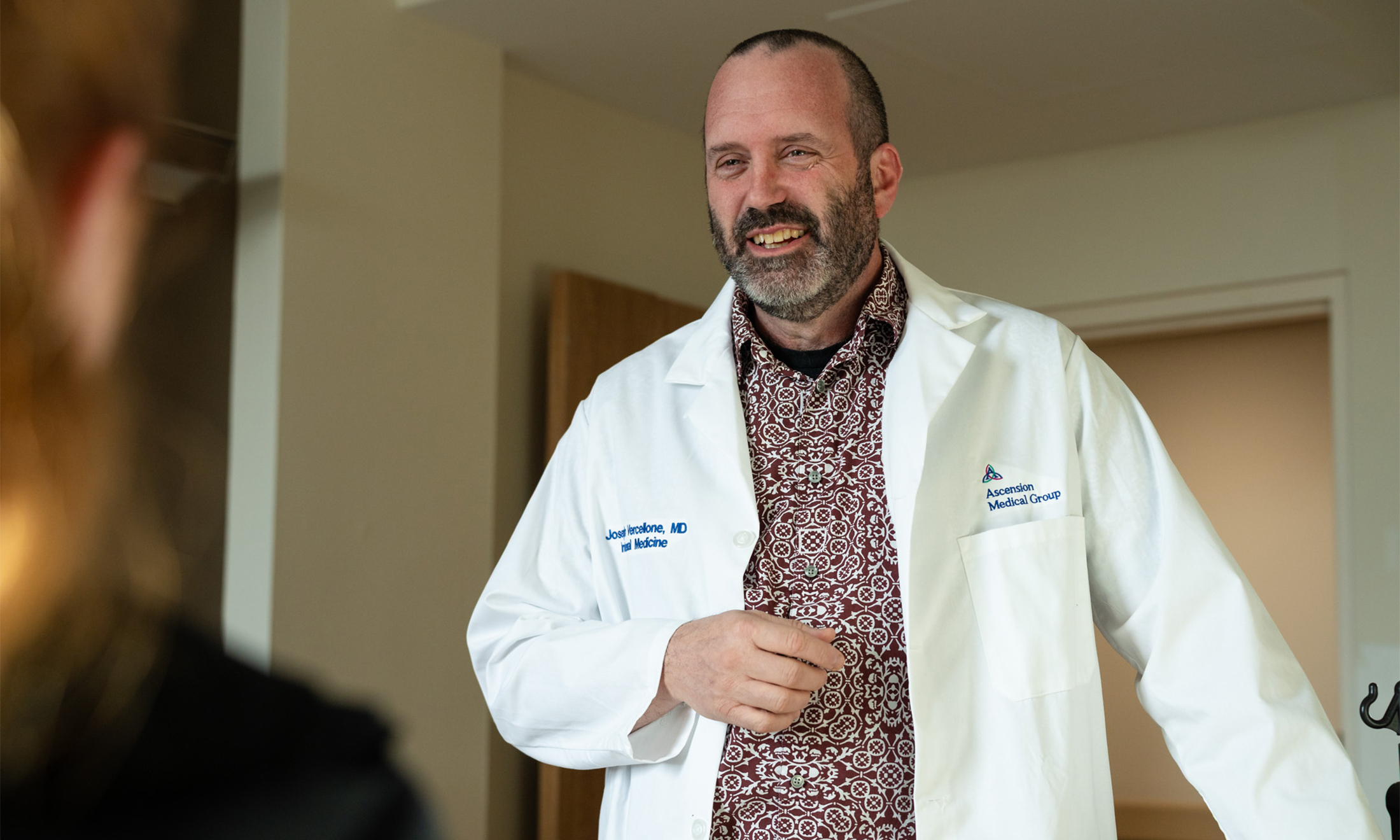
Joe Vercellone built a successful career asking companies about their technology needs until he posed an audacious question to himself: Could he become a doctor in his 40s?
Short answer? M.D. now follows his name.
Long answer? Yes, but not before taking an incredible chance on a new profession (with almost no training in science) and a then-new medical school, while balancing it all with three young children and a wife working full time.
Either way, Vercellone, OUWB ’16, who is now an academic internal medicine physician at Henry Ford Rochester Hospital, wouldn’t change a thing.
“It’s the personal connections,” he says. “Nothing makes me feel better as a physician than having a family member or patient smile when you’re walking into the room and be happy that you’re coming in to talk with them.”
“Their eyes light up, and maybe you see some of the pain and anxiety they have in their face go away for a few moments,” he adds. “To have them joke with me even though they might be going through some of the worst times of their lives … that’s what makes all the difference to me.”
‘Positive change in the world’
Vercellone grew up in Warren, Michigan, and graduated from Centerline High School in 1987.
After high school, he went to New York University’s Tisch School of the Arts, where he earned an undergraduate degree in film and television production.
He returned to Michigan on a mission to get into commercial and/or industrial film production, but struggled to find work. Through a temporary work agency, Vercellone ended up working in public affairs at General Motors, where he “fell into their desktop publishing environment.”
From GM, he moved to a marketing agency, where he specialized in digital pre-press, which is preparing and finalizing documents for printing before they go to press.
As the internet boomed, Vercellone moved to technology consulting around web applications and Microsoft platforms.
He did tech consulting for 15 years.
“It was one of those things where it was fine, I had a job, I was making money, and it was going well,” he says.
During this time, he also got married and he and his wife, Kate Bublitz, had children (William, Phillip, and Charles, all grown now) — but around 2009, Vercellone began to have serious questions about whether or not he was on the right path professionally.
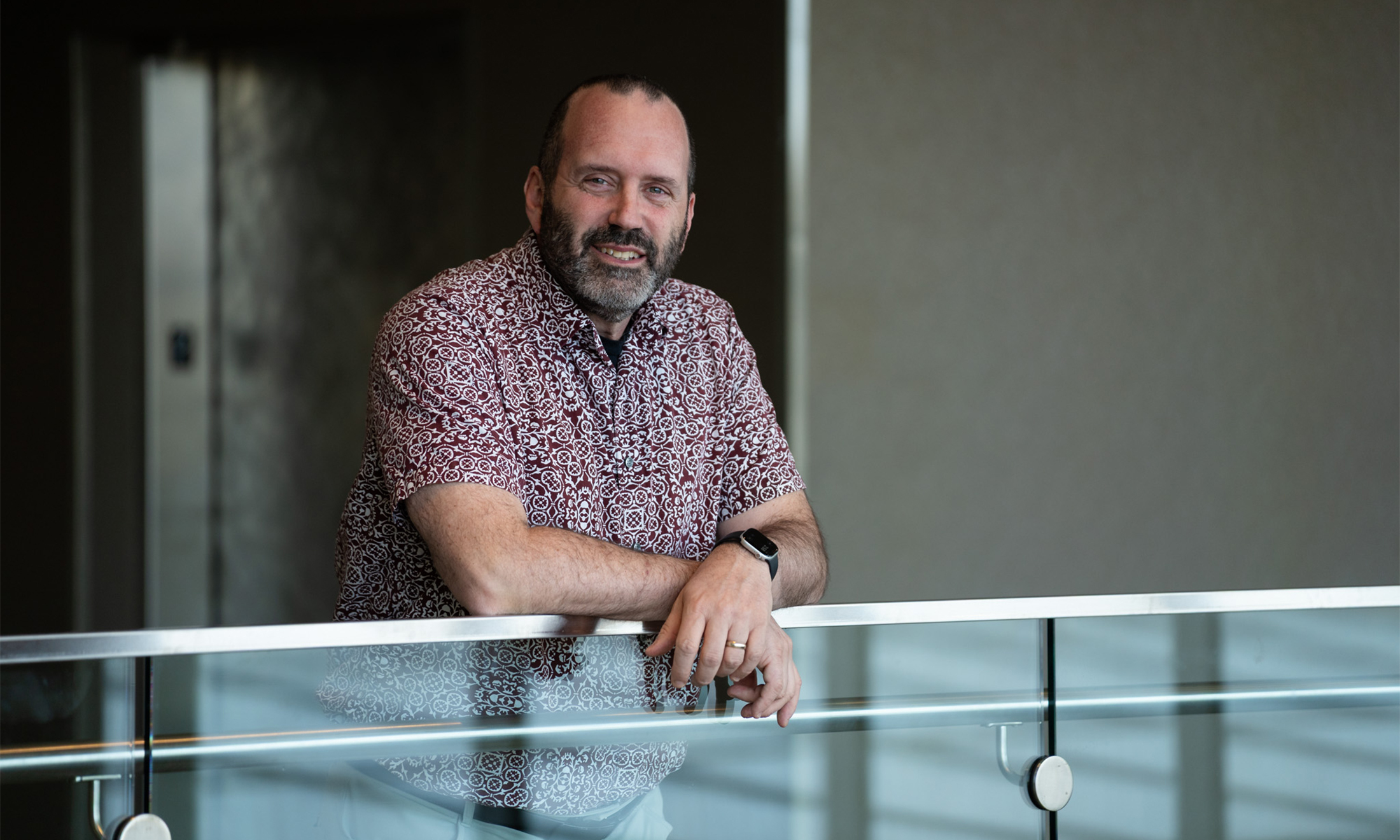 “I wanted to do something that was going to be beneficial to people and make me feel like I was making a positive change in the world,” says Vercellone. “I wanted to do something that was going to be beneficial to people and make me feel like I was making a positive change in the world,” says Vercellone. |
|---|
“I suddenly started looking at myself in the mirror and saying ‘Every day you wake up, and all you’re doing is trying to get companies to spend money that you know they barely have on things you’re trying to convince them that they need,’” he says.
“Plus, we were doing a lot of custom development … just about every day you’re getting yelled at by the customer for not doing exactly what was in their mind,” he says. “It was just difficult … and I started questioning what I wanted to do in life.”
Faced with the reality that his heart wasn’t in it, Vercellone did a lot of soul searching and set out to find something that was “more fulfilling and better for the world, better for society.”
“I wanted to do something that was going to be beneficial to people and make me feel like I was making a positive change in the world,” he says.
Vercellone and his wife talked about the possibility on him becoming a doctor. Even though it meant becoming a one-income family (Kate was a teacher at the time), they decided to take a big chance on it.
“Kate did a great job supporting me,” he says. “If it wasn’t for her, we wouldn’t be having this discussion.”
‘An excellent role model’
While still working as a tech consultant, Vercellone started taking pre-med courses at night. After a couple of years, he was ready to start medical school, and OUWB had essentially just opened.
It didn’t take him long to see he had acquired many skills to help him in medicine. For example, he had spent years refining and perfecting how to communicate effectively as a successful tech consultant — and he realized he could use those same skills as a physician. There were other benefits too.
“I came from a world where I put in 60 hours a week for my job, and I just looked at medical school as my new job,” says Vercellone. “I found the transition to be less stressful with that mentality.”
He says he “loved (OUWB’s) message and approach.”
He has especially fond memories and appreciation for what he learned at OUWB about patient care and interaction. By example, he points to the value of making empathetic connections and using techniques like sitting or kneeling next to patients instead of “hovering at the bedside.”
“And I carry that forward now at Henry Ford,” he says. “I’m a teaching physician and tell my residents that I might not be the textbook smartest physician that they’re going to round with or quiz them on some biochemical process that’s going on … but I’m going to be an excellent role model for how to establish good physician-patient relationships.”
When he’s not taking care of patients or teaching residents and medical students, Vercellone can often be found on or near a stage.
He and his wife met at Avon Players in Rochester, Michigan. Today he is “very active” with the Birmingham Village Players (he calls it his “home” theater), where he has acted and directed. In fact, Vercellone and his son adapted Charles Dickens’ “A Christmas Carol” into a one-man show that he directed.
And he does it for very much the same reasons that prompted him to change careers and become a doctor.
“It’s very important for people to do whatever they need to do in life to fulfill themselves intellectually, emotionally, and spiritually,” he says. “I talk to residents and medical students all the time about what they want to do, what kind of doctors they want to be, and how it aligns with the type of person they want to be.”
“Because I feel like I’ve done that pretty well.”
More from inMedicine