Medical schools continue adding arts and humanities into curricula, but they need to do even more, according to a new study by four professors at Oakland University and OUWB.
“Integration of Arts and Humanities in Medical Education: a Narrative Review” recently was published in the American Association for Cancer Education’s Journal of Cancer Education.
The four authors of the study are all from Oakland University: Rachel Smydra, Ph.D., professor, Department of English; Matthew May, Ph.D., associate professor, Department of Sociology; Varna Taranikanti, M.D., Ph.D., associate professor; and Misa Mi, Ph.D., professor, both from OUWB’s Department of Foundational Medical Studies.
The narrative review examined literature from about three dozen medical schools that showed educators are implementing didactic and experiential instructional approaches to embedding the arts, humanities, and social sciences into the medical school classroom.
However, the review recommended “more deliberate attempts to offer consistent, required course or learning experiences that include elements of (arts and humanities) throughout educational programs.” The review also recommends that educators find ways to better measure the effectiveness of arts and humanities in medical schools.
Mi says the review is all about shining light on the important role medical educators play in helping future health care providers get in touch with themselves so that they can eventually form the best possible connection with their patients.
“Just taking care of patients is not enough,” she says.
“You have to really understand emotions, relationships with others and how that can affect feelings, and human culture and how that might affect a patient’s perception of illness.”
“If physicians don’t attend to those feelings and emotions, patients are much more likely to not comply with treatment,” adds Mi.
She says that’s where the arts and humanities can come into play.
‘More than proficiency in basic sciences’
According to the Association of American Medical Colleges (AAMC), “a growing evidence base suggests that learning experiences that integrate arts and humanities within curricula may lead to a variety of important learning outcomes.”
“These include skills-based outcomes such as honing observation and interpretation skills, relations outcomes such as empathy, communication, and teamwork, and transformational outcomes at the level of professional identity formation and advocacy.”
The review by OU and OUWB faculty notes that AAMC changed the Medical College Admission Test (MCAT) in 2015 “to highlight an increased need for medical schools to embed components of liberal arts in their curricula.”
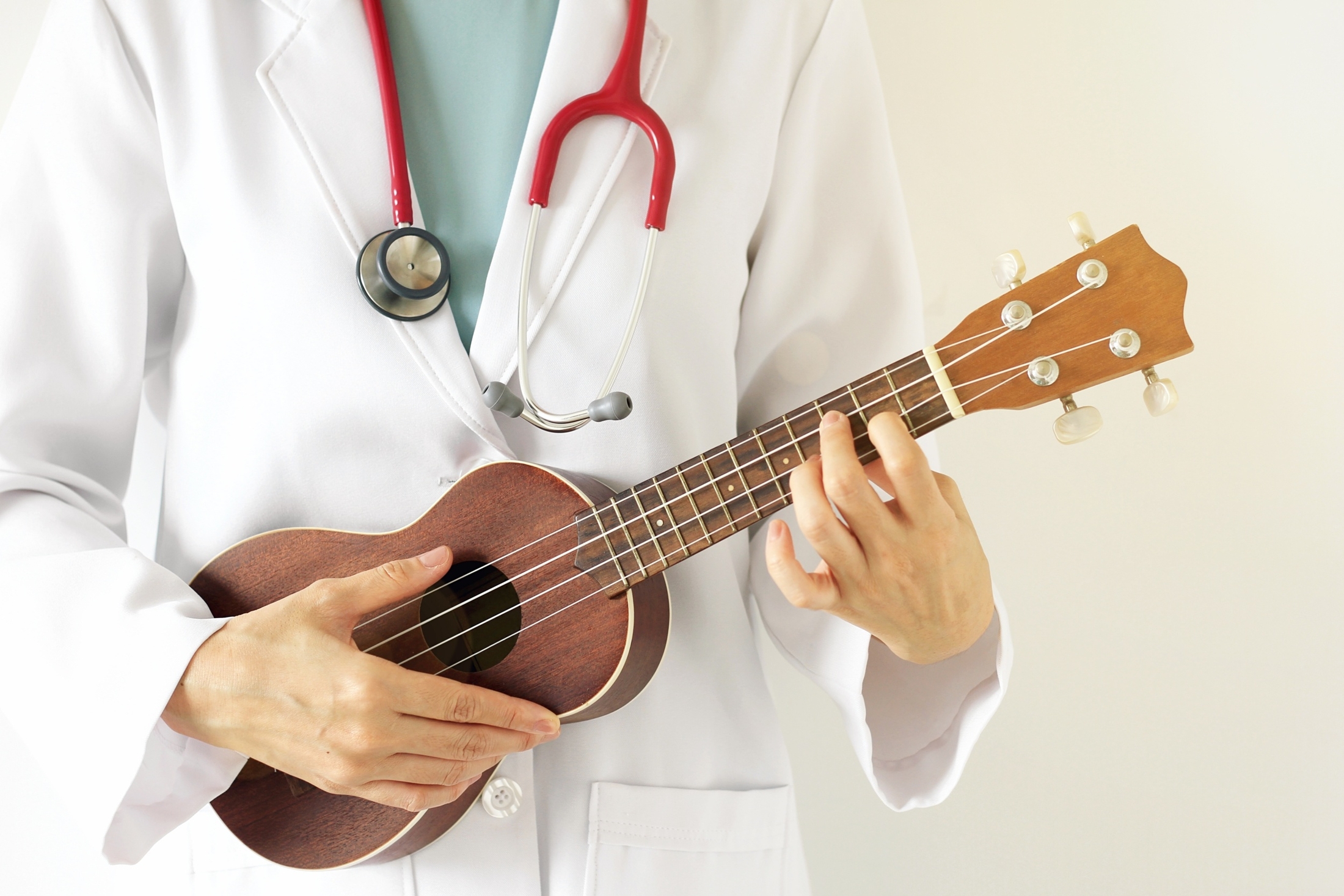
That has led medical educators to implement more connections to creative writing, literature, theater, movies, music, and the visual arts into their curricula.
Mi says a book or movie like One Flew Over the Cuckoo’s Nest may help students understand challenges for patients with mental illnesses; music may help reduce stress, and paintings may help with interpretation and observational skills.
At OUWB, some classes incorporate musical elements, such as exposure to opera, while others include medical improv sessions and writing narratives, just to name a few.
“By adding sections on behavioral and social sciences and critical analysis and reasoning to the MCAT, AAMC’s actions acknowledged it takes more than proficiency in basic sciences to become a competent and compassionate physician,” the review states.
Taking a cue from AAMC, Mi says in 2019 she led the formation of Oakland University’s Learning Community for Integrating Arts and Humanities to Health Professions Education, established through the OU Center for Excellence in Teaching and Learning.
 September 30, 2021
 By Andrew Dietderich