‘Anything is possible’
How Nabeeha Shakil-Ahmad began medical school two months after having a baby — and why she sees hardship as a privilege to serve
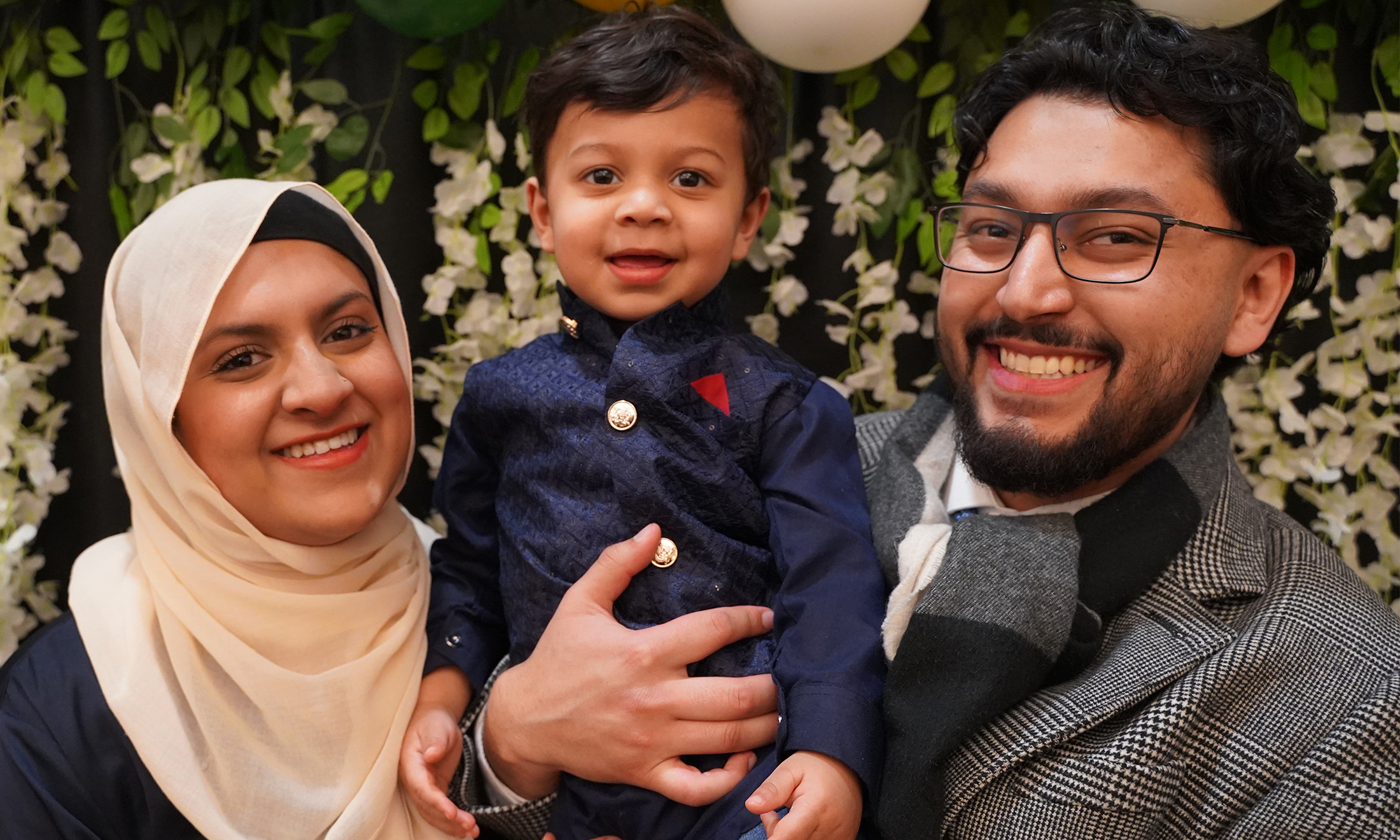
Nabeeha Shakil-Ahmad, her husband Ahmad Mutahhir and their son, Yusuf.
Student Success
 March 20, 2026
 By Andrew Dietderich
Mother, wife, daughter, caregiver, and medical student — Nabeeha Shakil-Ahmad balances more roles than most of her classmates at Oakland University William Beaumont School of Medicine.
And while she carries them with a calm sense of purpose and gratitude, the self-described nontraditional student has also taken on another role: encouraging others who may feel that the path to medicine is too difficult or unconventional.
The second-year medical student has mentored younger students, presented research, served on panels, and actively shares her experiences with others navigating similar paths.
Her message, however, is less about achievement and more about perspective.
“The biggest thing I want people to take away is that hardship is part of life,” says Shakil-Ahmad. “Medical school is hard. Life is hard. This just happens to be my hard. But I try to look at it as a privilege, an opportunity to grow and serve.”
‘I need to be here’
Growing up, Shakil-Ahmad became aware of the importance of representation and access in health care. Early experiences showed her how gaps in health literacy and access can deeply affect families and communities.
“I learned how much there is a need for people in medicine who understand the communities they serve,” she says. “People who can connect culturally, communicate clearly, and advocate for their patients.”
Another moment that shaped her path came when she was 8 years old and her father suffered a heart attack. Instead of shrinking away from the situation, she felt drawn toward understanding it.
“I wasn’t allowed in the ICU or part of the medical conversations,” she recalls. “But I remember feeling like, ‘No, I need to be here.’ I wanted to understand what was happening and be part of helping.”
She describes it now as an early glimpse of the path she would eventually pursue.
That interest continued when she attended the University of Michigan-Dearborn, where she double-majored in Behavioral and Biological Sciences and Business Studies.
“I chose business because I wanted to understand leadership and teamwork,” she says. “Medicine is about much more than science — it’s about people, systems, and working together to help patients.”
Choosing purpose despite difficulty
Two months before starting medical school, Shakil-Ahmad and her husband welcomed their first child.
The timing made an already demanding transition even more challenging.
“I had a lot of people telling me I should delay school,” she says. “There was a lot of noise telling me it wouldn’t be possible.”
But for Shakil-Ahmad, the decision came down to intention and purpose.
“I had set my mind on this path, and I knew why I was doing it,” she says. “Not just for myself or my family, but because I felt a responsibility to use my skills to help others.”
Her perspective is deeply shaped by her faith and a principle known as ihsaan — striving to do what is good with sincerity and excellence, even when things are difficult.
“In Islam, we’re taught that if you save one life, it’s as if you’ve helped all of humanity,” she says. “That idea stays with me. It reminds me that the work we do in medicine is ultimately about service.”
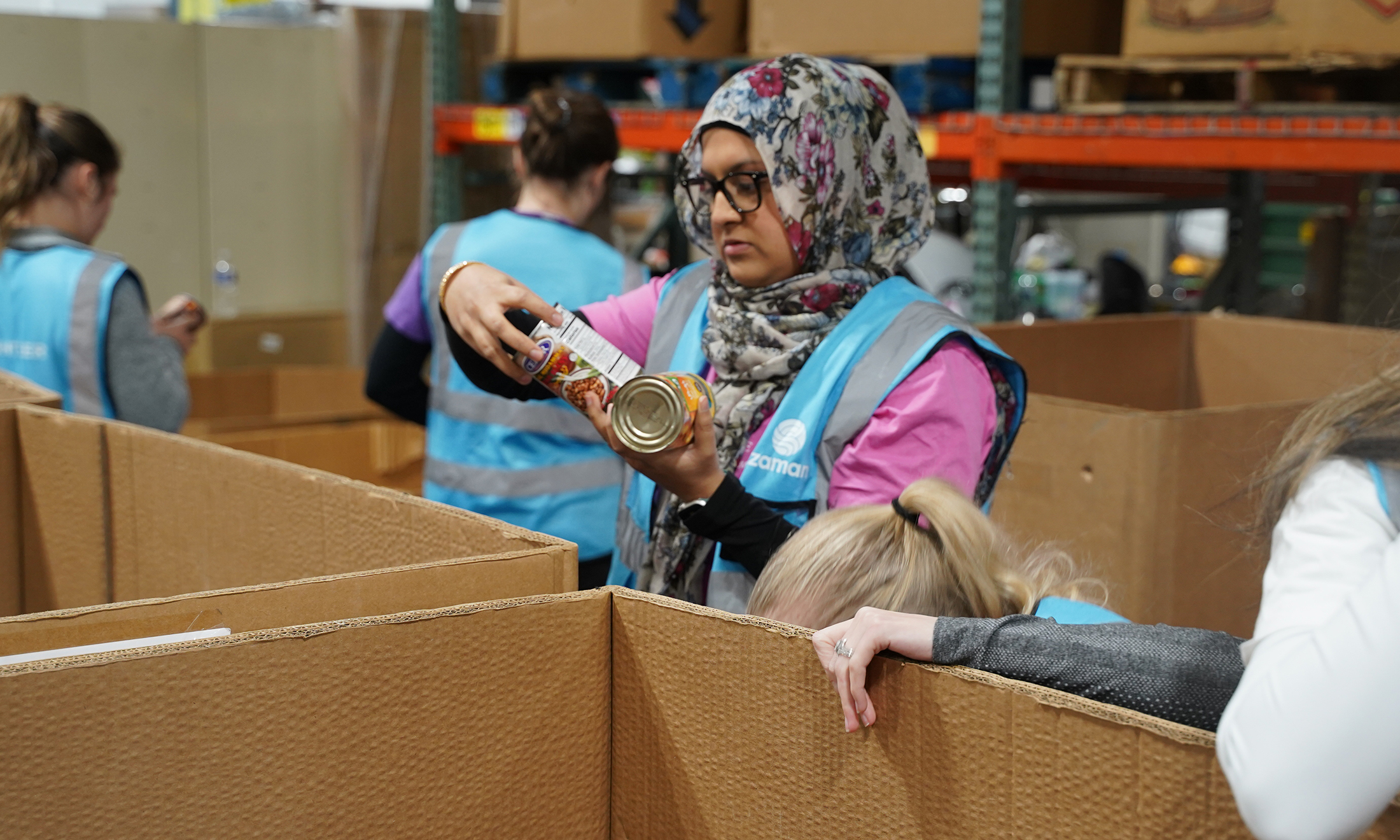 Shakil-Ahmad sorts food items during OUWB's 2026 Martin Luther King Jr. Day of Service. Shakil-Ahmad sorts food items during OUWB's 2026 Martin Luther King Jr. Day of Service. |
|---|
In 2024, Shakil-Ahmad officially became part of OUWB’s Class of 2028.
The months that followed were demanding.
“It was exhausting waking up early for school, coming home late, and caring for a newborn,” she says. “There were moments where I wondered if I had taken on too much.”
Strong family support helped her navigate the transition. Looking back, she says the experience reshaped her confidence.
“It made me realize that we are capable of more than we think when we have the right intentions and support,” she says. “Sometimes the hardest experiences end up strengthening your sense of purpose.”
Paying it forward
The term “nontraditional student” can refer to many different paths — students who take time away from school, pursue other careers first, or navigate significant life responsibilities while pursuing medicine.
Ray Wilson, director of Medical School Admissions at OUWB, says students with these experiences add depth and perspective to medical education.
“They often bring maturity, resilience, and a strong commitment to service,” he says. “Those qualities are incredibly valuable in medicine.”
Shakil-Ahmad says those experiences are exactly why she shares her story with others.
During her first year, she participated in a panel of Muslim women in medicine aimed at mentoring undergraduate students. She and her peers also presented research at the University of Michigan Medical School’s Diversity in Medicine Conference.
“We want people to know that there isn’t just one path,” she says. “You can pursue your goals while still honoring your responsibilities, your family, and your values.”
She also serves as a mentor through OUWB’s Big Sib/Little Sib program and volunteers whenever possible in community service initiatives.
In addition, she currently serves as the first female president of the American Muslim Medical Student Association (AMMSA) at OUWB. The group recently hosted “Breaking Fast, Building Understanding: OUWB Fast-a-thon & Community Iftar,” which brought together nearly 200 students and faculty members.
For Shakil-Ahmad, moments like that reflect what motivates her most: building community and serving others.
Perspective above all
Looking back on the past year, Shakil-Ahmad still sometimes pauses to reflect on how much has happened.
“There are moments where I think, ‘How did I do all of that while taking care of a baby?’” she says with a laugh.
But rather than focusing on the difficulty, she focuses on the meaning behind it.
“Everyone has something hard in their life,” she says. “This just happened to be my hard. And I try to see it as a privilege because it gives me the opportunity to grow, to help others, and to pursue a career centered on service.”
“And if sharing that perspective helps someone else believe they can do difficult things too,” she adds, “then it’s worth it.”
More from inMedicine